
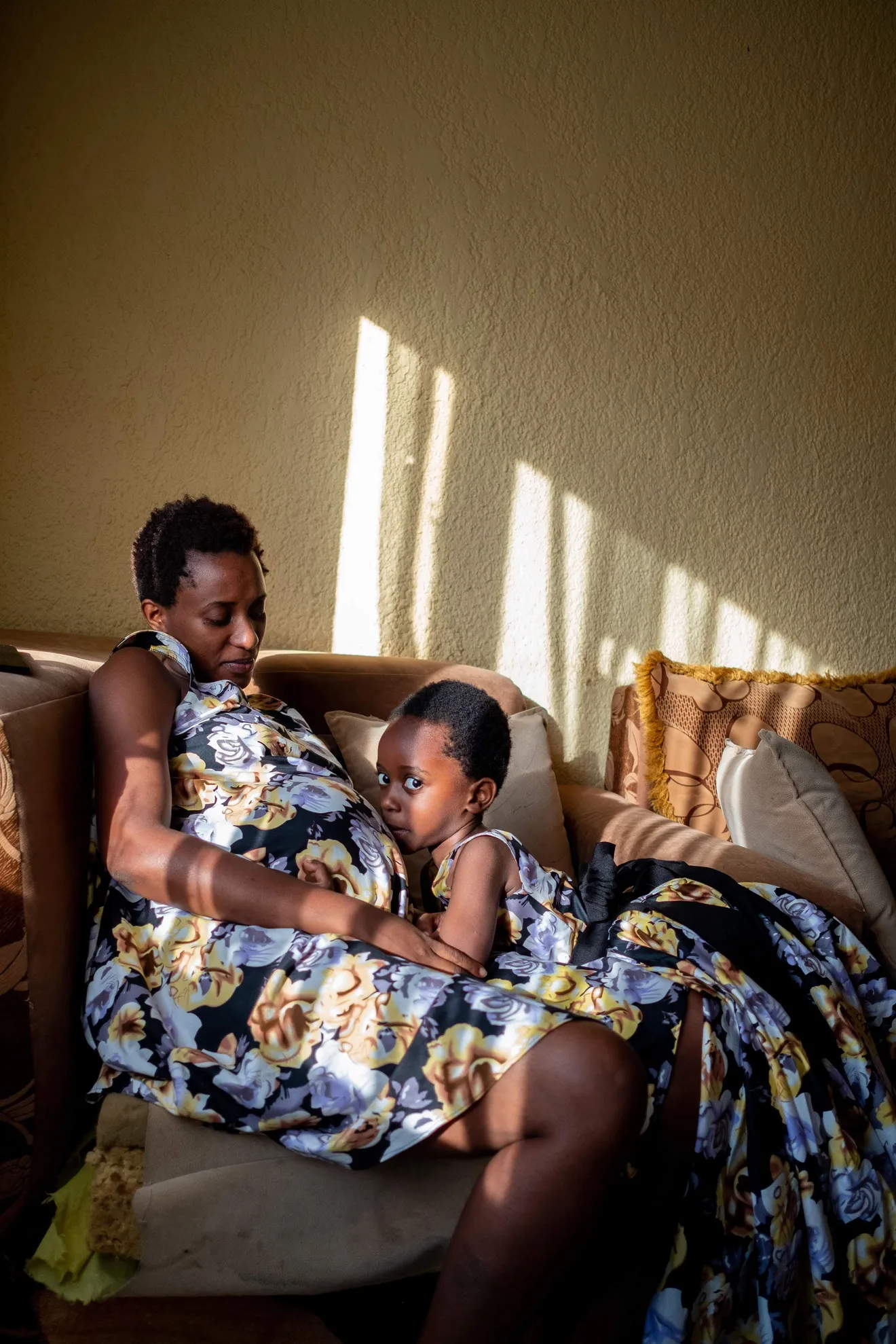
Aline Murara Tuyisenge, seven months pregnant, with her daughter
Sarah, who kisses her mother's belly at their home in Kicukiro, Kigali,
Rwanda. August 14, 2019.
Growing up in an orphanage without knowing my birth mother left me with questions about love, care, and belonging. Through Motherhood, a personal photo essay begun in Rwanda in August 2019, I explore those questions through the everyday lives of women and their families.
What does it truly mean to be a mother? For me, this question begins with someone I never had the chance to meet.
I spent 18 years growing up in an orphanage in Rwanda. I never knew my birth mother, and her absence left me wondering about the relationship between a mother and her child.
Becoming a photographer gave me a way to approach those questions through other people's stories. The camera could not recover my own missing history, but it could help me pay attention to the ways care is expressed around me.
Creator
JEAN BIZIMANA
Location
Rwanda
Date
Aug. 19, 2026
Learning to look at care
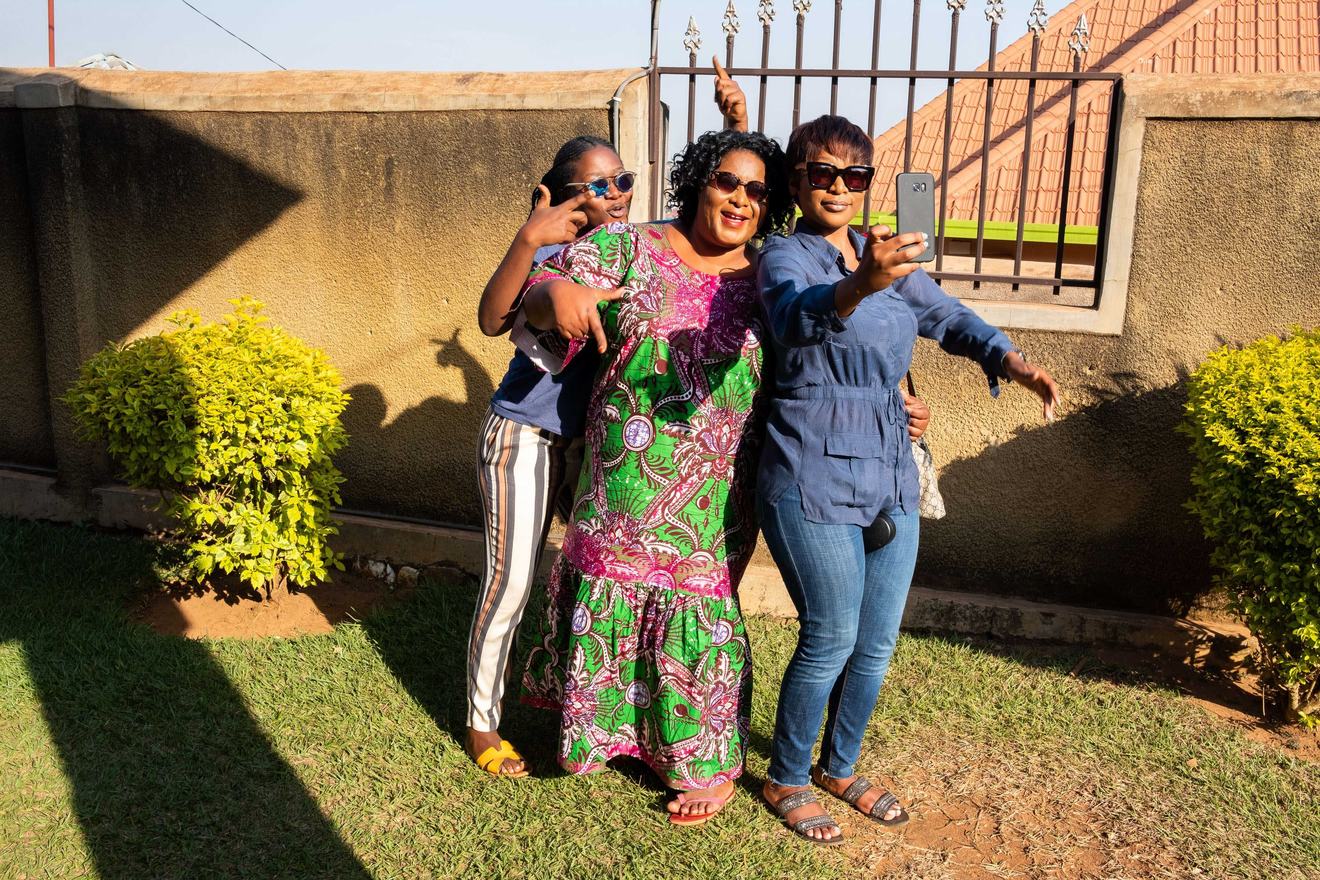
In August 2019, I began Motherhood as a personal exploration of women's experiences in
Rwanda. I wanted to understand how love takes shape in daily life: in the demands of raising
children, the responsibilities of earning a living, and the small gestures that bring family
members close.
The wider project embraces different perspectives, including young mothers, single mothers,
experienced mothers, grandmothers, and women who have chosen not to have children. There
is no single experience that can speak for all women. Making room for different lives also
means recognising that a woman's value cannot be measured by whether she becomes a
mother.
The photographs in this story move between homes, a school birthday celebration, a bar, a
restaurant, and a journey to school. These are ordinary settings, but they hold much of the
work of caring for a family. Together, they give my opening question a human scale.
My upbringing explains why I began. It does not make these women's experiences mine. I want
their stories to retain their differences, and their voices to carry meanings that extend beyond
my personal search. Each encounter adds another perspective rather than completing a single
definition.
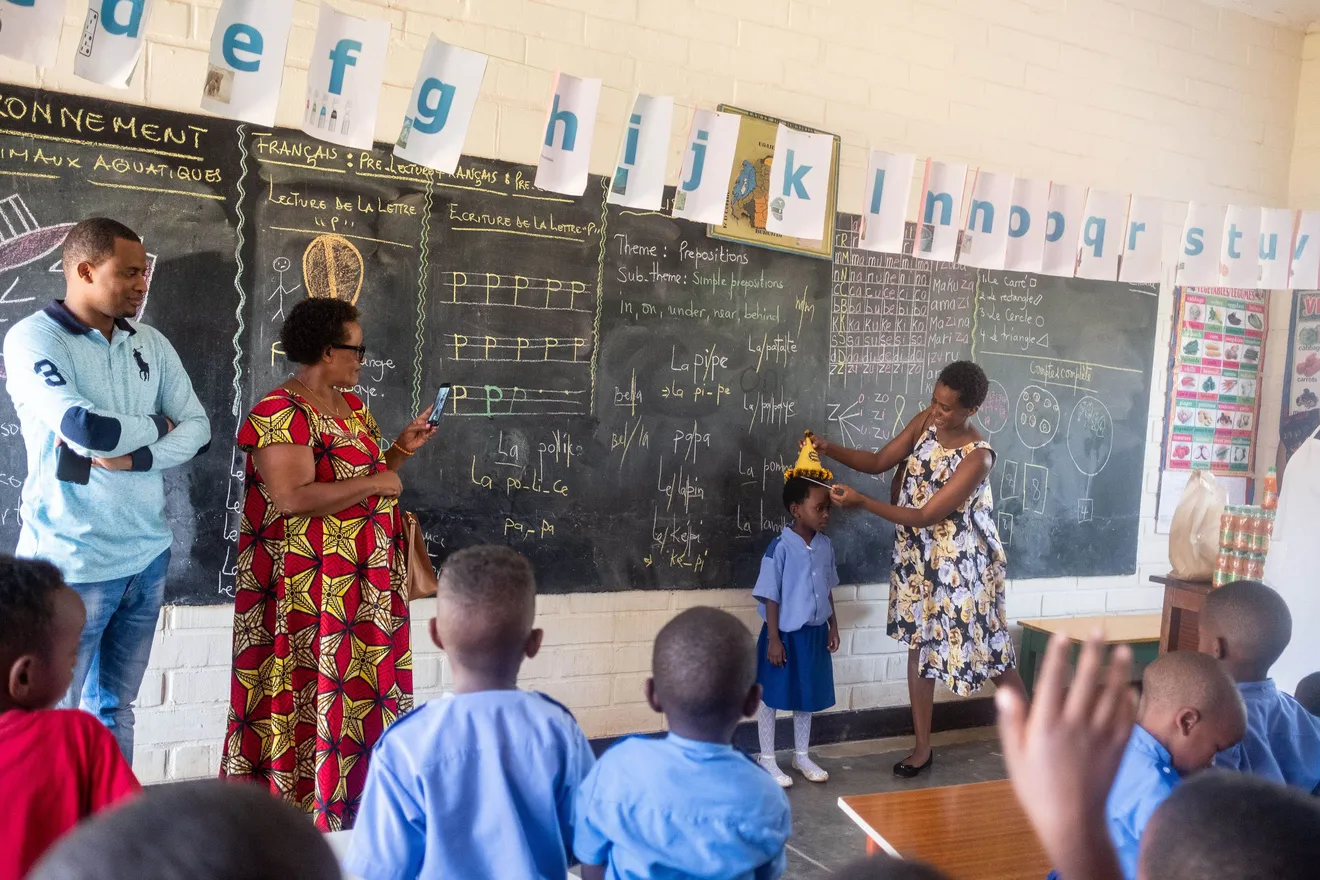
Aline Murara Tuyisenge joins her brother, Murara Alan, and their mother to celebrate her daughter Sarah's fifth
birthday with classmates at her school in Kigali, Rwanda. August 14, 2019.
Aline: a bond before birth
At her home in Kicukiro, Kigali, Aline Murara Tuyisenge shared a moment with her daughter,
Sarah. Aline was seven months pregnant, and Sarah leaned towards her mother's belly to kiss her unborn sister.
That gesture sits at the heart of this essay. It brings together a mother caring for her firstborn,
a child anticipating a sibling, and a new relationship beginning before birth. For someone who grew up wondering about maternal connection, it is a particularly meaningful image.
On August 14, 2019, I also photographed Sarah's fifth birthday celebration at her school. Her mother, uncle, grandmother, and classmates joined the occasion. Where the photograph at home holds an intimate exchange, the birthday celebration shows a wider circle surrounding a child.
Aline described motherhood through love, mercy, happiness, and patience. Her words help me look beyond the visible tenderness of these photographs. Patience suggests something sustained: the attention a child needs while growing, changing, and discovering the world.
The images hold a celebration and an expectation, while her words point towards the continuing care between such occasions.
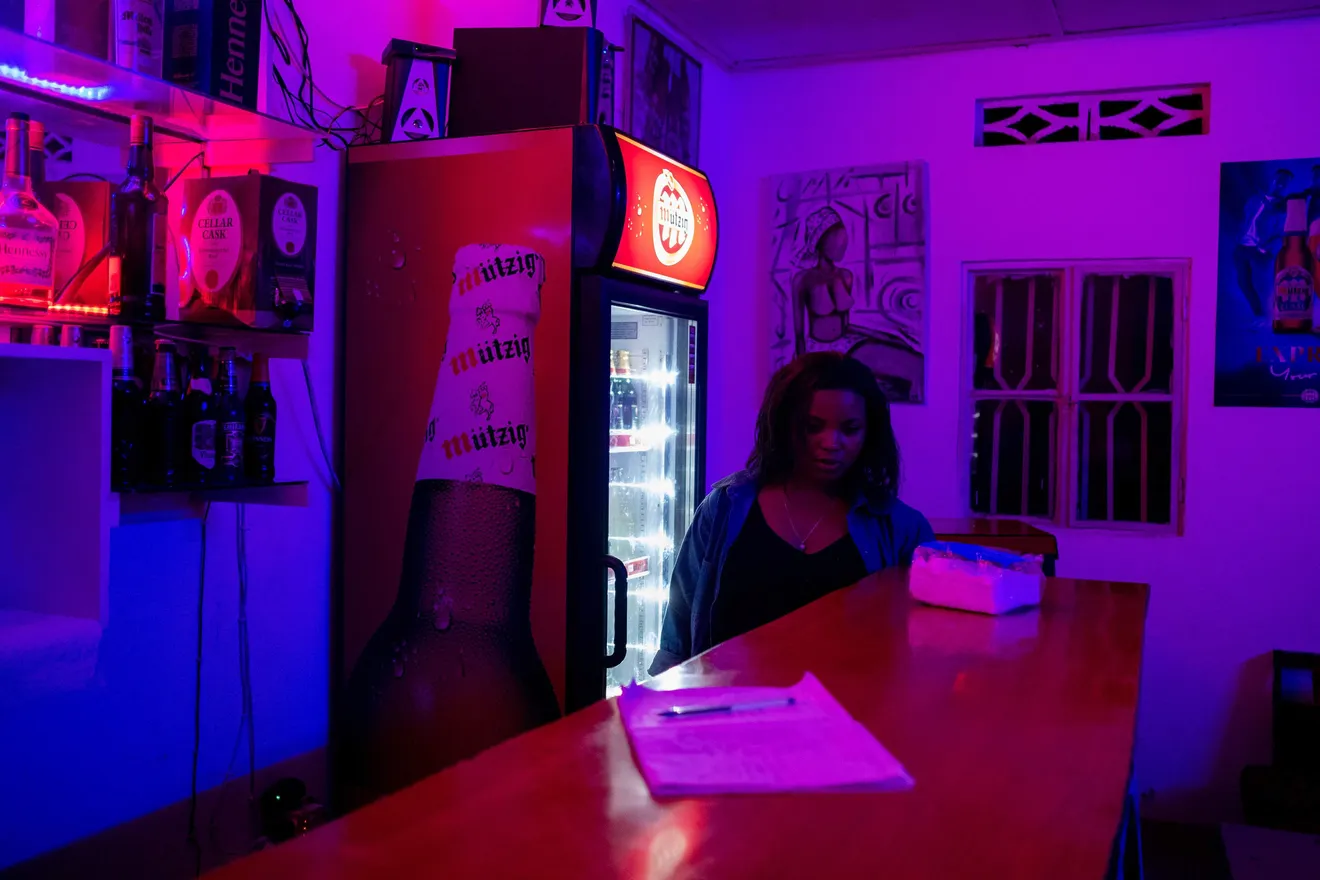
Music artist and single mother Devo Queen works at her bar in Gikondo, Kicukiro, Kigali, Rwanda. She runs the
establishment and works as both bartender and cashier. August 15, 2019.
Devo Queen: care, work, and ambition
Devo Queen, a Rwandan music artist and single mother, offered another perspective. Alongside
her musical ambitions, she ran a bar, working as both bartender and cashier to support herself
financially.
I photographed her preparing to leave her home in Kanombe and working at her establishment
in Gikondo. A former high school classmate helped care for her daughter, Bina, while she
worked. That friendship is an important part of the story. It makes visible the support through
which a mother can manage competing demands on her time.
After her father's death, Devo Queen was raised by her own mother. Her understanding of
parenting therefore sits alongside her experience of growing up in a household headed by a
single mother.
Her photographs bring several parts of her life into view. She is an artist, a business owner,
and Bina's mother. These roles belong together, even when their demands are difficult to
balance. To understand her experience of motherhood, the essay also needs to recognise her
work and aspirations.
Her story draws my attention to the practical arrangements behind care: a livelihood, a trusted
friend, and the effort involved in supporting a child while pursuing a life of one's own.
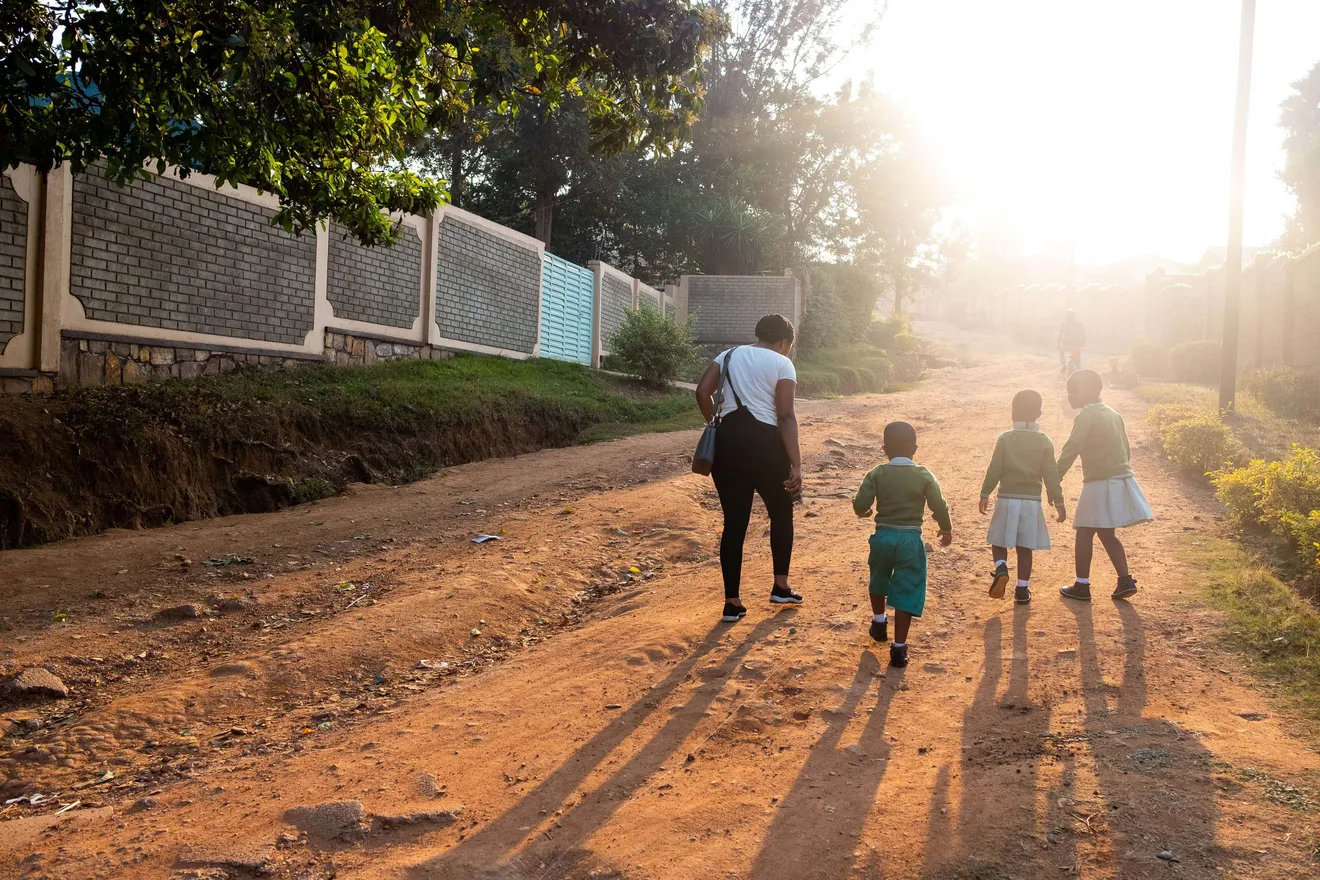
Jeanne Uwizeye accompanies her son and her brother's children, whom she also cares for, to school in Kicukiro,
Kigali, Rwanda. August 16, 2019.
Jeanne: the work of holding a family together
Jeanne Uwizeye became pregnant after finishing high school. Having lost her parents in 1998,
she faced family and social pressure and moved from northern Rwanda to Kigali.
When I photographed her on August 16, 2019, she was working in her brother's restaurant in
Kicukiro. One image shows her preparing meals for customers. Another follows her as she
accompanies her son and her brother's children, whom she also cares for, to school.
These two scenes connect paid work with family responsibility. Preparing food and getting
children to school are tasks that can pass without much attention. Yet they require time, effort,
and a continuing presence. In Jeanne's life, care extends beyond the relationship between a
mother and her own child.
Her past helps explain the circumstances in which she became a mother, but it should not be
the only way readers encounter her. The photographs also show what she does in the present:
working, contributing, and caring for children within her family.
Through Jeanne's story, my question becomes more concrete. What does motherhood ask of a
person on an ordinary working day? The images offer a glimpse through responsibilities carried
from the workplace to the school journey.
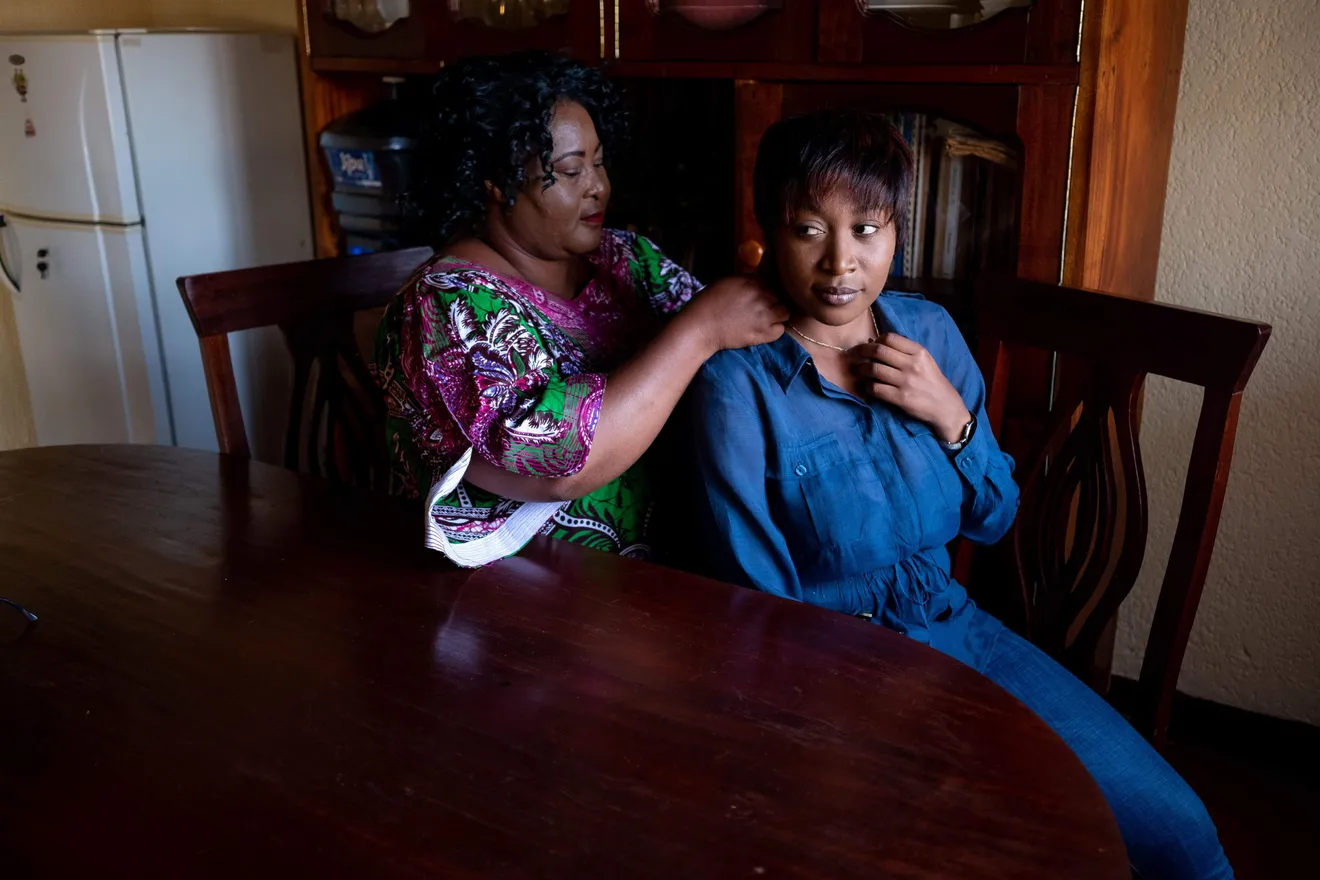
Melanie Nyiraninda places a necklace around her daughter Sandrine Intwari's neck at their
home in Gatsata, Kigali, Rwanda. August 16, 2019.
Melanie: affection, recognition, and what remains unanswered
At their home in Gatsata, Kigali, Sandrine Intwari used her phone to photograph her mother,
Melanie Nyiraninda, and her younger sister, Francaise Uwase. In another moment, Melanie
placed a necklace around Sandrine's neck.
A daughter making a picture of her family and a mother giving a gift offer two small
expressions of connection. Within an essay shaped by my own camera, Sandrine's photograph
also makes space for a family member's way of looking.
Melanie described motherhood in terms of social recognition: “Being a mother means gaining
respect in my society.”
Her words introduce a question that reaches beyond the home. Motherhood carries meaning
within a community as well as within a family. Understanding the recognition Melanie
describes also means reflecting on the expectations placed on women, including those who do
not have children.
Across these encounters, I find tenderness, work, ambition, support, and responsibility. The
stories do not resolve into one definition. Each woman brings something particular to the essay,
and each asks me to look beyond an idealised image of maternal love.
Photography cannot tell me who my birth mother was or recover the experiences we did not
share. It allows me to stay with the questions her absence left behind. Through Motherhood, I
explore how love is learned, expressed, and shared, while recognising the women whose
everyday lives give those questions depth.