
It’s not common for an NGO and a startup to co-build software. Too often, NGOs are left with tools that weren’t designed for impact, ethics, or sensitive contexts. With Oxfam, we built differently - and that approach is now being noticed beyond the sector.
Consent shouldn’t be a checkbox, it should be a conversation. At Fairpicture, we built FairConsent to replace paper forms and rushed explanations with a calmer, clearer process. When Oxfam put the app to work across real assignments, their feedback sharpened everything that mattered: visual explanations that make rights and choices easy to grasp, and a direct DAM integration that keeps consent traveling with every photo and video. The result is consent people actually understand - and teams can actually use - without slowing the story down.
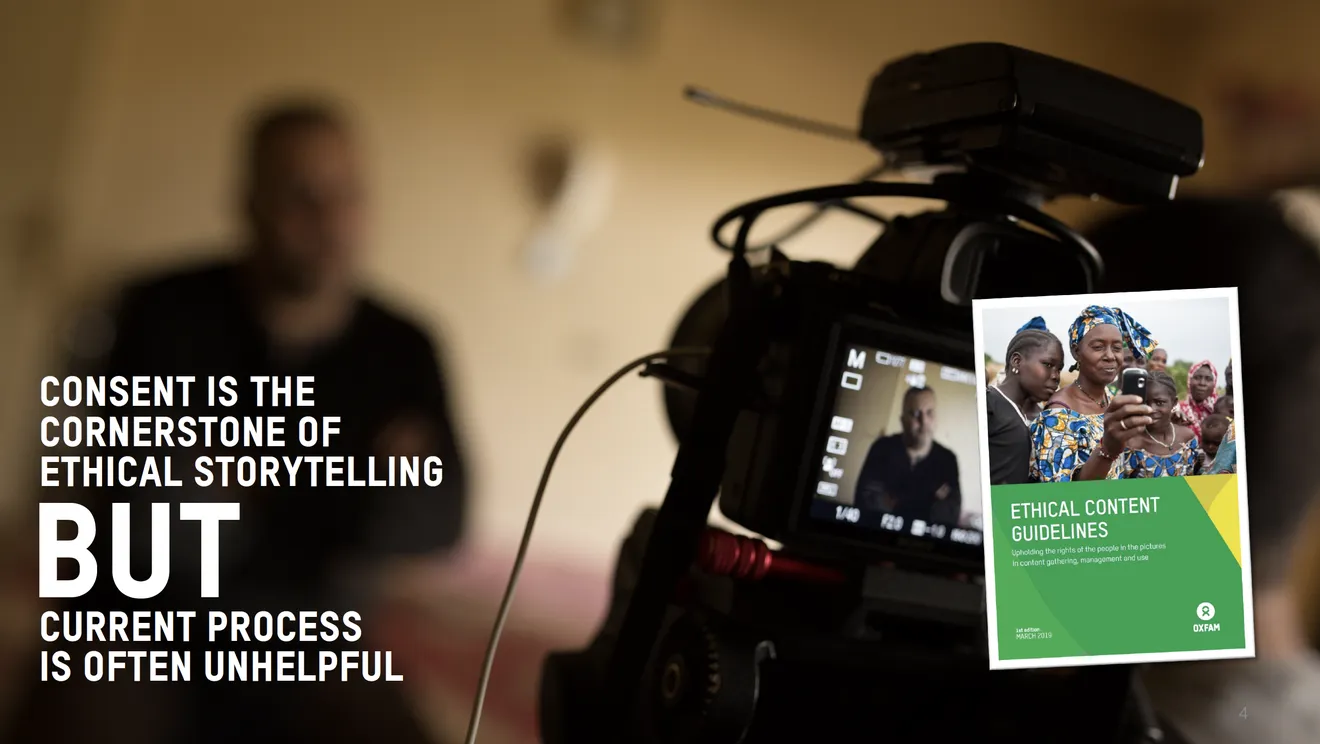
Through FairConsent, Oxfam started to replace its current, paper-based consent process with a more seamless digital experience. The aim is to offer a better experience for both contributors and storygatherers.
Slide taken from an Oxfam presentation.
At Fairpicture we’ve delivered hundreds of photo and video productions with one non-negotiable: people’s dignity and agency come first. We learned early that consent is only ethical if it’s truly understood, and recorded in a way that supports the conversation, not just the paperwork. There wasn’t a digital tool that did that for NGOs, so we built FairConsent, an informed consent app designed for ethical storytelling.
A little later, Oxfam reached out with the same challenge at scale. Consent was the cornerstone of their communications, yet too often it felt like speech rather than conversation. Language barriers got in the way. Rights and choices weren’t always shared or clear. People found it hard to imagine how content might be used. Paper forms and scattered audio/video files added stress and risk. And a signature didn’t prove the discussion really happened.
Oxfam began testing FairConsent in real assignments and fed back precise, practical insights. Their field experience sharpened the product, making it more inclusive, more usable, and more dependable for anyone who needs digital consent for photos and video.

Noah Arnold, Fairpicture
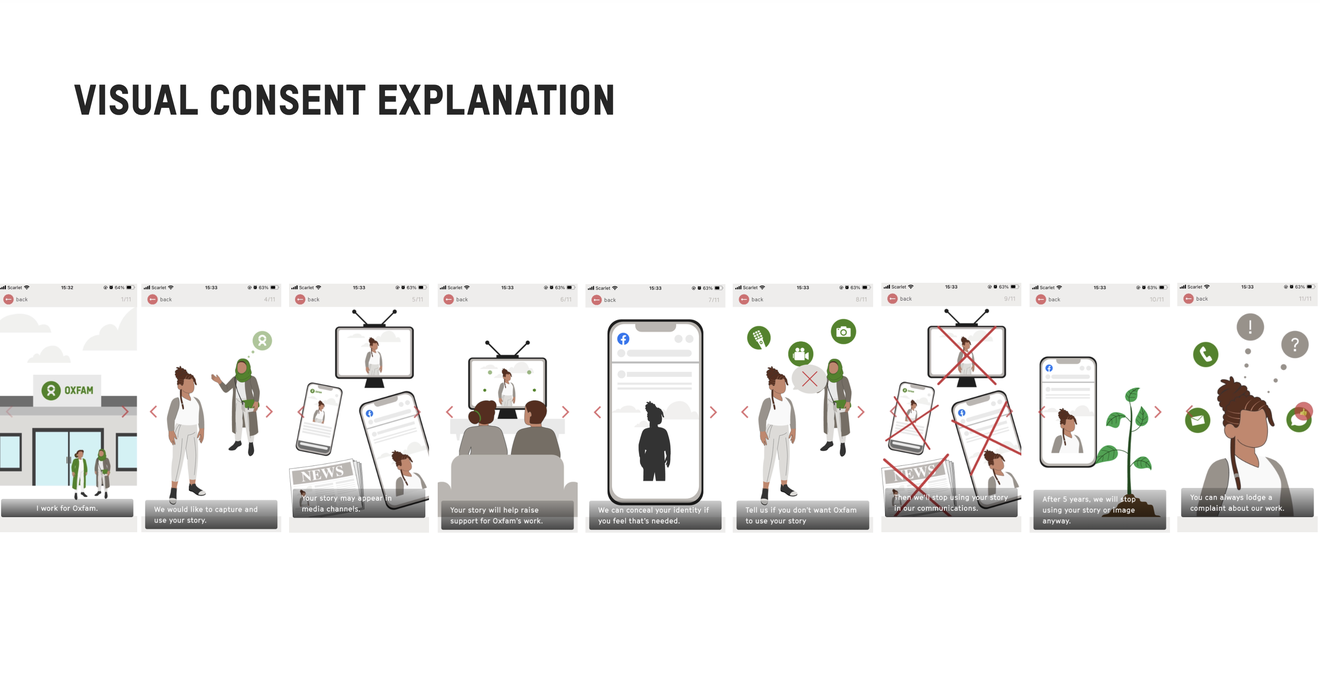
The idea of “visual consent” in a nutshell: Facilitate the informed consent process as much as possible. Use different consent slides depending on context, so consent givers can closely relate to the visuals. Allow organizations to add subtitles to each slide in multiple languages.
The biggest step forward is the move from text to visual consent explanations. Instead of front-loading legal language, storygatherers sit down with contributors and swipe through illustrations developed with intercultural-communication experts. Minimal captions keep the focus on plain language and a real dialogue. Six clear representations help people recognise their situation and options. The aim isn’t to “simplify the law” but to make the meaning clear: What am I agreeing to? What are my rights? What choices do I have? Visuals lower barriers, prompt questions, and create space for a confident “yes” – or a confident “no.”
Noah Arnold, Fairpicture
Oxfam surfaced a familiar bottleneck: consent in one place, media in another, and spreadsheets in between. That gap is where delays and risk creep in. Together we pioneered a direct DAM integration so consent and content travel together. Oxfam now uses this at global scale: when photos or videos are ingested into their DAM, the linked consent record and key metadata are already there. Editors see rights and restrictions at the moment of use, not as an afterthought. That means faster decisions, fewer mistakes, and a single source of truth for what can be published, where, and for how long. Just as importantly, the approach opened the path for future integrations so other FairConsent users can benefit from the same end-to-end confidence.
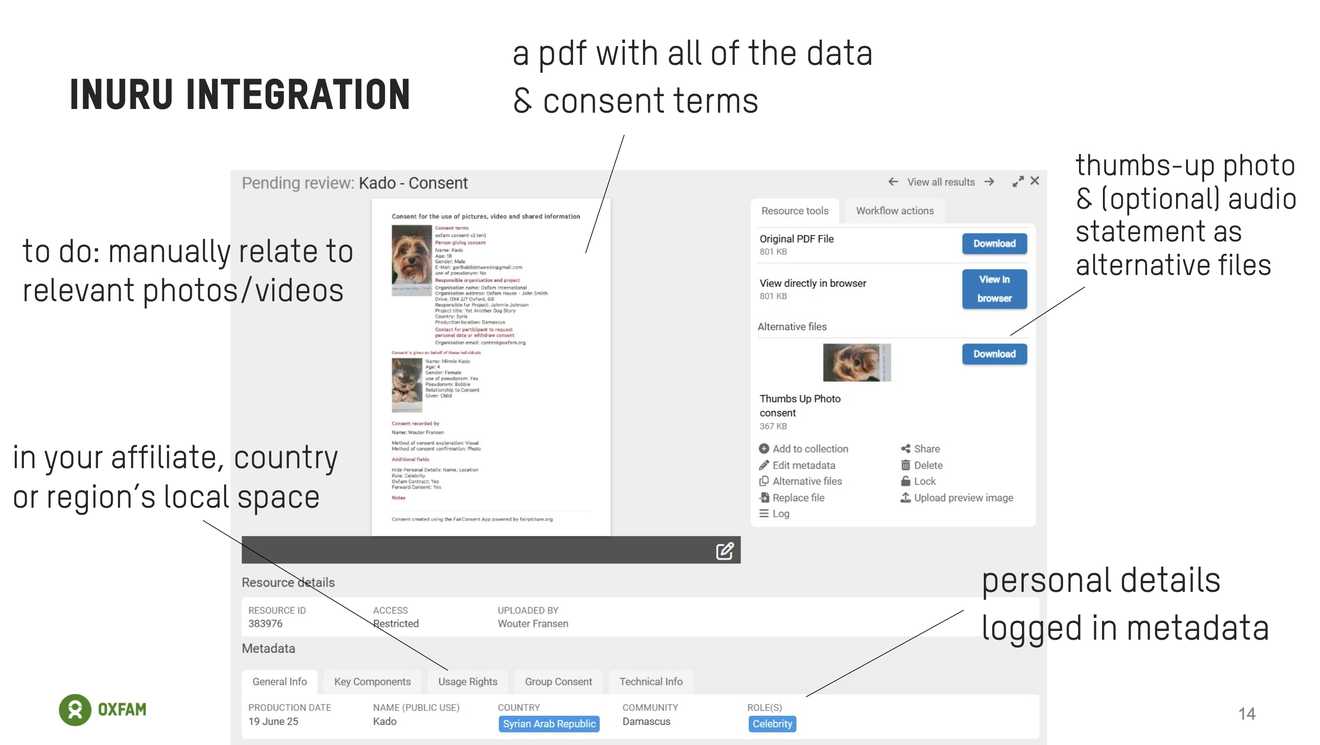
FairConsent integrates with multiple DAMs. Consents and their metadata are uploaded to the DAM, where they’re linked to the corresponding images and videos.
Slide taken from an Oxfam presentation.
FairConsent was born from our own production work. It has grown through rigorous testing and candid feedback from organisations like Oxfam – and from many others who care about doing this properly. That’s how we translate field realities into product improvements and raise the bar for NGO consent management.
Today, FairConsent helps contributors understand their rights and make a decision they’re comfortable with. It helps storygatherers run calmer, clearer conversations without drowning in admin. And it helps organisations reduce risk while moving faster, because consent is no longer a parallel process – it’s part of the workflow.
We’re still learning, and we’ll keep iterating: refining the visuals, expanding languages, and deepening integrations. The aim stays the same – make informed consent real, practical, and human.
Want to see it in action? We’re happy to show the visual consent experience and the DAM integration – and how FairConsent can turn consent from a signature into a shared understanding.
April 2025 - Laura Abad Guerrero
What OpenAI and Google’s copyright requests reveal about power, ownership, and ethical storytelling in the age of AI.
Learn more about AI, Copyright, and the Ethics of Consent
May 2026 - Daniel Caspari
Local creators were just the first step. Now Fairpicture is going further – with a new approach that puts narrative ownership where it belongs: with the people who lived the story.
Learn more about Step Aside.
October 2021 - Jörg Arnold
Informed Consent is essential to ensure the consent of the person photographed. Jörg Arnold writes on the right to one’s own image.
Learn more about Informed consent – The right to one’s own image
 by
Noah Arnold, September 2025
by
Noah Arnold, September 2025