
Step Aside.
 by
Daniel Caspari, May 2026
by
Daniel Caspari, May 2026
The last few years have not exactly been kind to our sector. Since the end of the pandemic, conflicts have multiplied, NGO funding has dried up, and budgets have been cut across the board. I’m not giving away any secrets when I say that Fairpicture hasn’t been immune to this. And while our second pillar – digital and streamlined consent management – continues to evolve, the further development of our services in the area of ethical storytelling has somehow stalled.
At the same time, the core of what we’ve built our reputation on – namely, replacing imported Western creators with local visual artists – has now become almost the norm in our industry. What was once new to so many is now the new standard. This raises the question: If this isn’t innovation anymore, then what is?
We came to a conclusion: the innovation we built our name on is for some of our clients no longer enough. So we went looking for what comes next – and this is what we found.
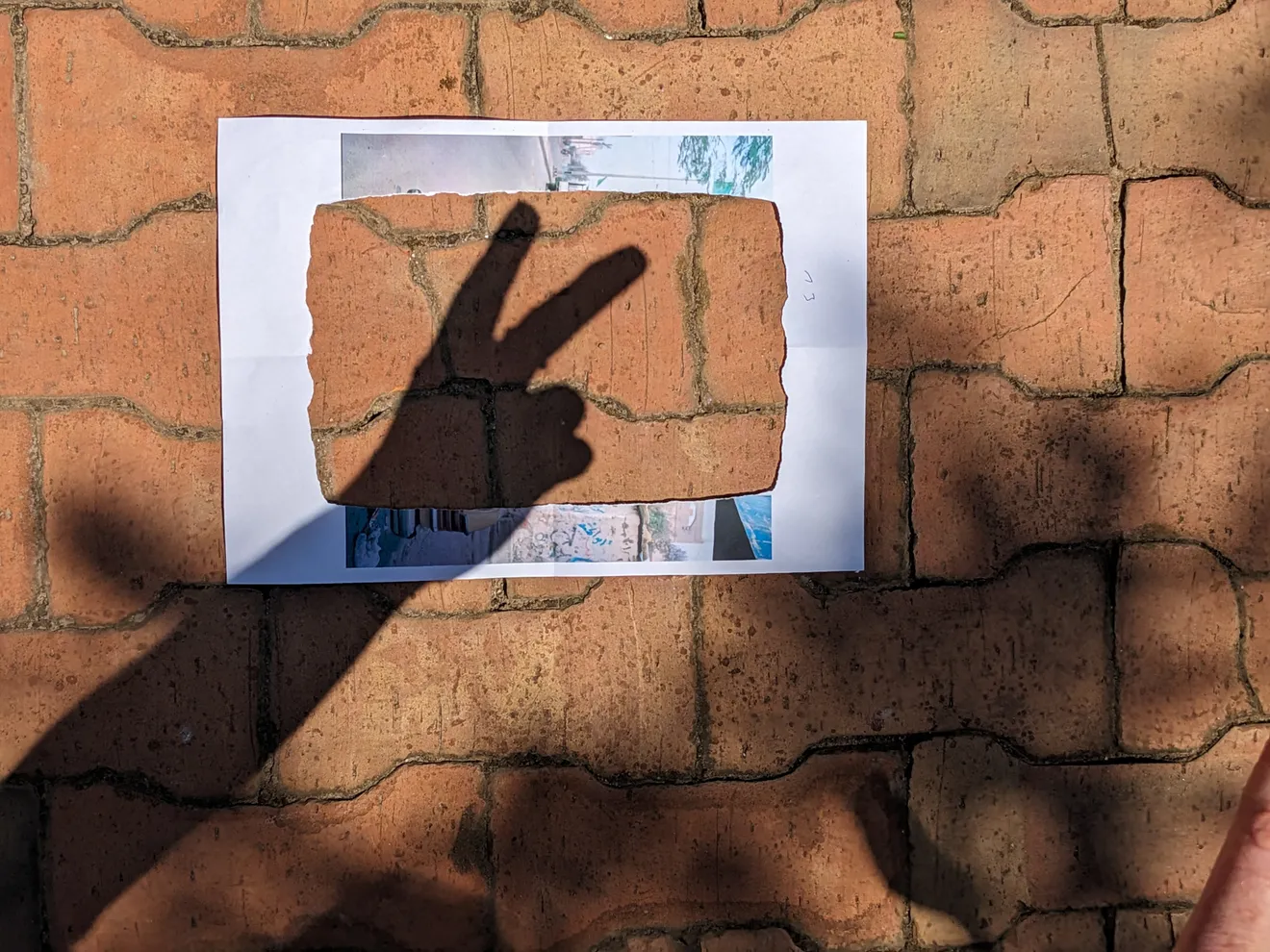
© Tom Martin
Where This Started
My personal connection to what we now call Community-Led Storytelling (CLS) started in 2022, during the work on the Impact Diaries – my last project before I joined Fairpicture and the first time I collaborated with a local visual creator and experienced first-hand what it means to let contributors tell their stories themselves. That changed something in me.
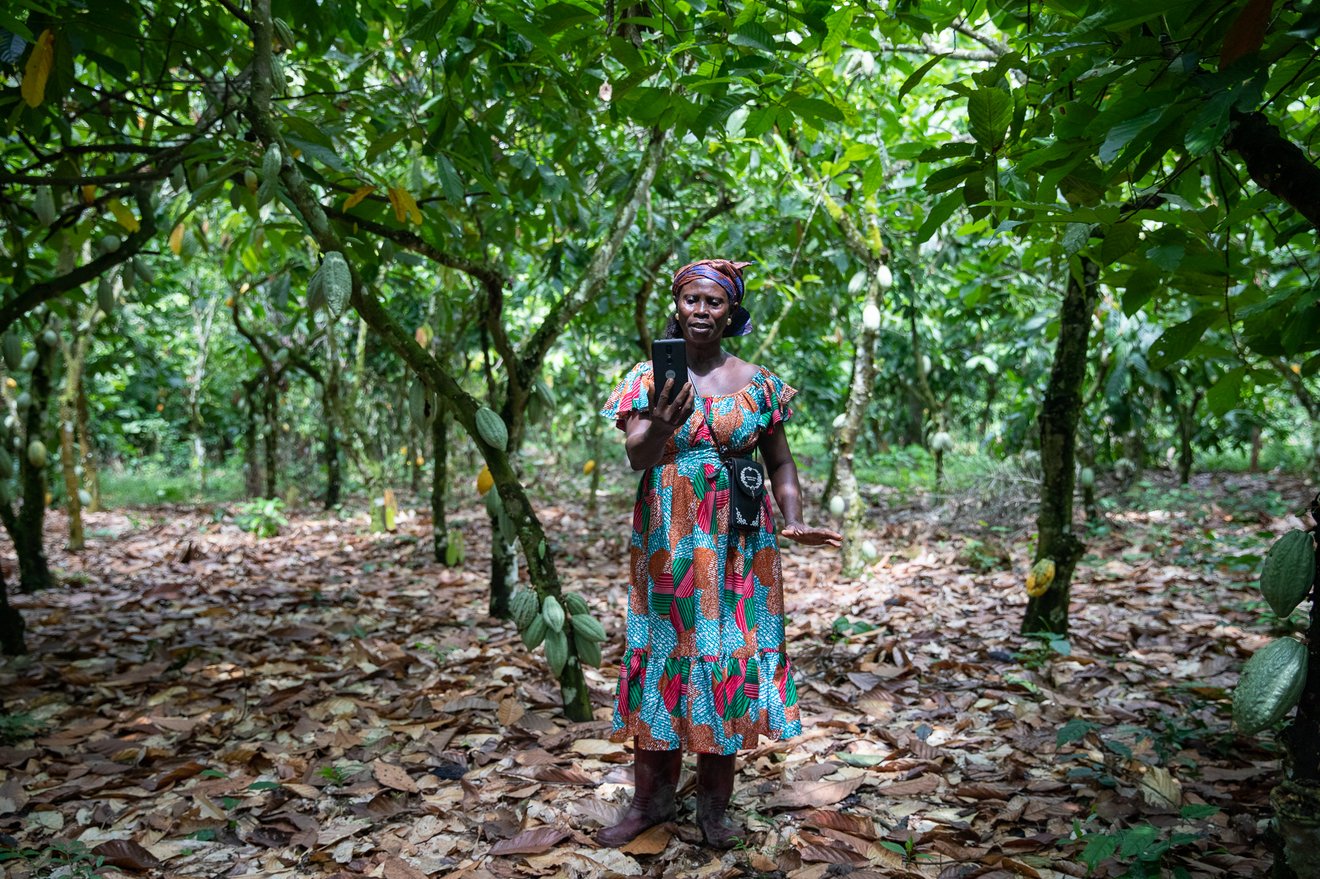
Mina Antwiwaa recording new Impact Diaries – © Nipah Dennis / Fairtrade Germany / Fairpicture
From there, I started paying close attention to what was happening in the space. There was a striking study from AMREF around that time comparing charity-led versus participant-led fundraising campaigns – with convincing arguments to go for the second. And there were always a few pioneers who have come up with something truly innovative.
Yet beyond these few pilot projects and showcase initiatives the discussion remained largely theoretical; under pressure from powerful interest groups – like us, Ibex Ideas or The New Humanitarian, who states that "what journalists owe to those they report on goes right to the heart of the colonial power imbalances”.
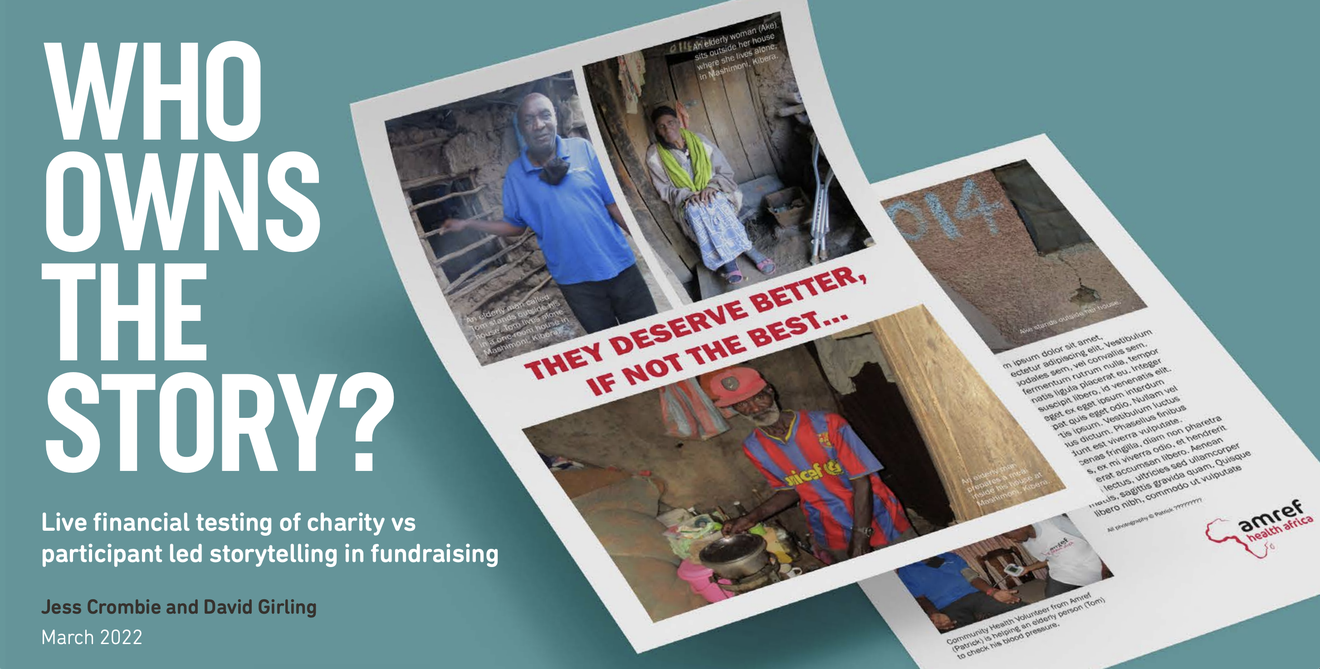
Key findings
.
+ The pack designed by the community health worker raised more money than the one created by UK-based fundraisers – and 38% more compared to previous appeals.
.
+ Stories produced by people from their own communities feel more authentic and can create a stronger emotional bond with donors.
.
+ Donors responded to a story told directly by the story ‘subject’ by recognising the positive challenge to some of the stereotypes INGOs are accused of perpetuating.
.
.
from the study Who Owns the Story? by Jess Crombie and David Girling in partnership with Amref Health Africa
The truth is: Our sector largely continued as before. Yes, more and more iNGOs and Humanitarian Aid Organisation are collaborating with local creators, informed consent processes have been embedded. In that respect, the situation has improved.
But what about the way stories are collected, what about the power dynamics? It seems that for most organizations, actually giving up control is still a step too far – even though everyone knows it’s the right thing to do.
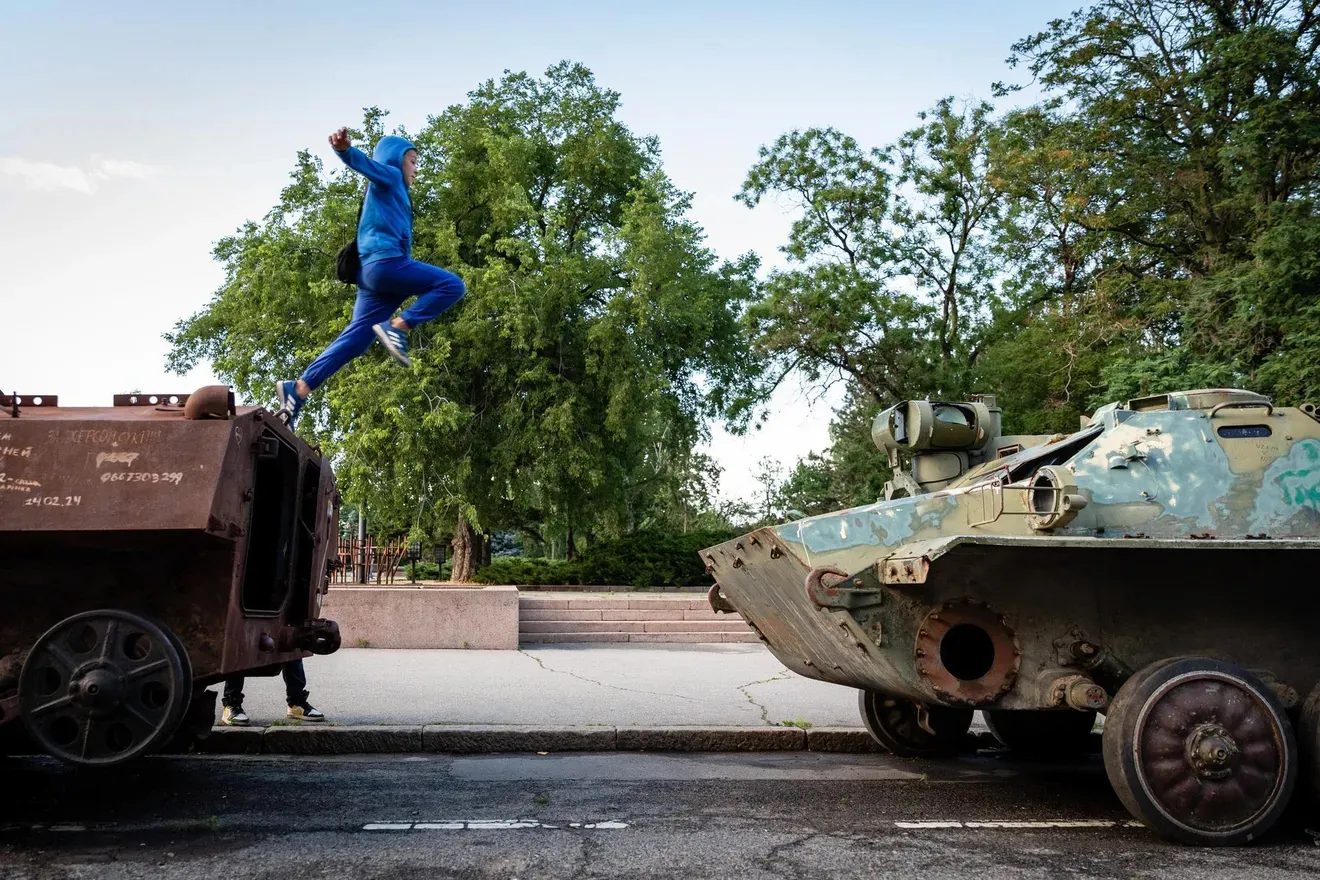
Destroyed Russian equipment is on display in the streets of Mykolaiv.
Photo: Mykolaiv, Ukraine – Katya Moskalyuk / DEC / Fairpicture
From Concept to Model
The honest truth? We had been talking about Community-Led Storytelling for years – without ever building a proper service around it. We published articles about it. We ran FairTalks on it. Together with Ibex Ideas, we put out a white paper on Community-Led Content Production – making the case that communities should own the narratives that concern them, that real storytelling demands time and trust, and that making it real would require everyone involved to genuinely rethink who holds creative authority. Those convictions stayed with us.
And they gave rise to further questions we needed to address:
What does a good CLS team actually look like? If contributors develop the visual material themselves – how do we ensure our clients also walk away with professional photos and videos their organisation can use? And how can we give our customers the confidence to willingly take a step aside when it comes to co-decision rights and ownership?

Collaborating with local visual creators was how we got started. Community-Led Storytelling – built on a network of 230+ local creators, led by facilitators who share their craft – is where that commitment leads.

Daniel Caspari, Fairpicture Business Developer
The deeper I looked at existing approaches, the more I noticed the same pattern: most CLS models I came across relied on western facilitators. And that brought me to the Gretchen question: if we have to fly in western facilitators every time our clients want to carry out a project like this, aren't we simply perpetuating the very patterns we set out to address? Where is the decolonization and localization in that?
So the question stopped being whether CLS was the right thing to do. It became: how do we make it work without repeating the patterns we were trying to change.
The Missing Piece
What had been missing in all previous Community Led Storytelling (CLS)-approaches we were aware of was a real transfer of knowledge – and the ability to offer clients cost-effective monitoring follow-ups of their project development without compromising on depth or quality.
Until now, most CLS-projects were initiated by Western consultants (exceptions prove the rule) who tended to be rather protective than collaborative, which is understandable, since most are run by dedicated individuals. However, this protectionism runs directly counter to our mission and theory of change.
Then we found the missing piece of the puzzle, and suddenly everything made sense.
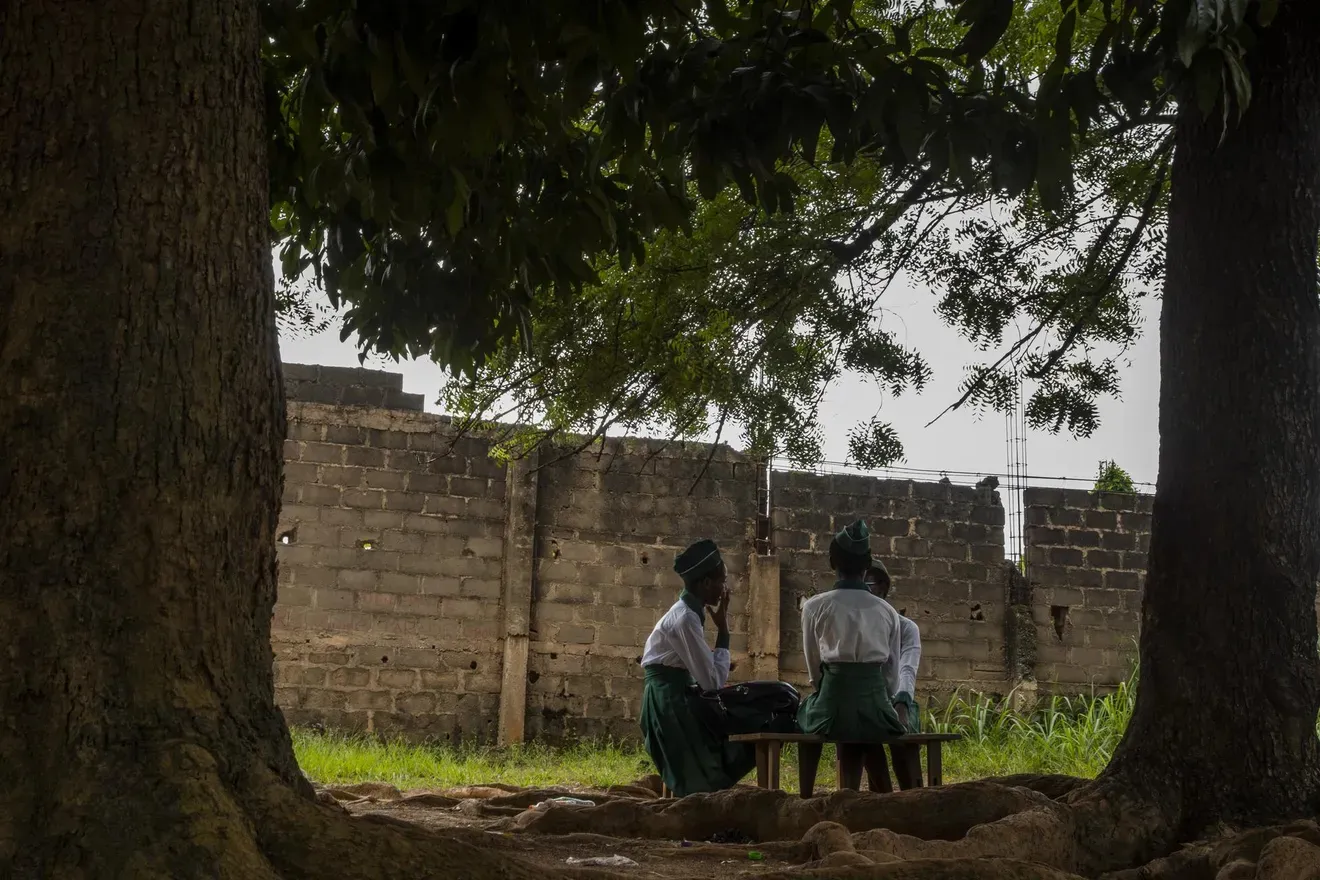
Violence Club at Trans-Ekulu Secondary Girls' School in Enugu (Nigeria), set up by the Global Initiative for the Development and Care of Women and Youths (GODCOWAY). GODCOWAY is a beneficiary of the Resourcing change fund.
Photo: Andrew Esiebo / Saferworld / Fairpicture
What makes us unique
Over the years, we've built and curated a network of 230+ visual creators. With many of them, the relationship has grown into something close – real trust, built across multiple projects. They know our standards. We know their strengths.
And then I met Tom and Michelle. Two facilitators who not only have the expertise needed to set up the CLS methodology with us, but also – and this was the key point – a genuine willingness to collaborate with our local creatives and openly share their knowledge.
Our shared goal: to support every CLS project with professional visual content and to empower our local network on our methodology.
Working with Tom also introduced me to someone I hadn’t come across before: the Brazilian theorist Paulo Freire. His argument – that people don’t learn by being treated as empty vessels to be filled with knowledge, but only when they’re active co-creators of it – is intended to serve as the philosophical foundation for everything we aim to achieve with CLS.
Tom Martin is a humanitarian photographer and senior lecturer. Together with Michelle Walsh, a senior lecturer and photovoice practitioner, they developed Collective Storytelling methodologies for Social Change – built on one core conviction: that contributor ownership is not a nice-to-have, but the whole point.
In Morocco, they worked alongside Indigenous Amazigh women to document the devastating effects of climate change on their land – a project that won the Emerald Publishing Real Impact Award. In Rwanda, their participatory filmmaking gave young people a voice around mental health stigma – and that work directly shaped the country’s National Youth Mental Health Strategy.
We’ve spent years developing and executing participatory methods. Now working with a partner like Fairpicture and their amazing network of local visual creatives – who are already deeply rooted in their communities, speak the local languages, and understand the local context – is exactly what’s needed to make community-led storytelling sustainable and truly transformative.

Tom Martin & Michelle Walsh, Fairpicture Facilitators
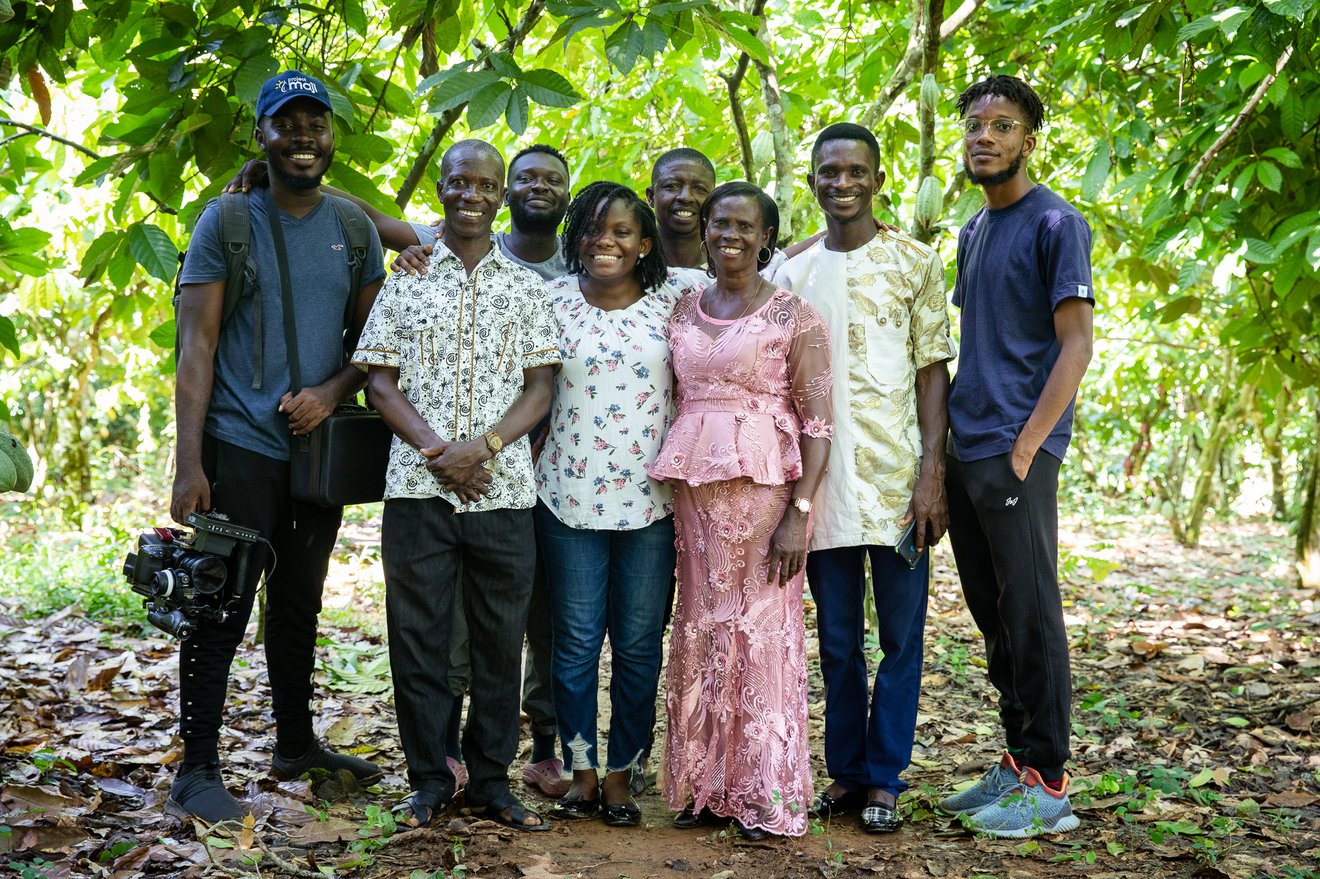
Fairpicture visual creator team together with the contributors of the first Impact Diaries from Abekwease, Ghana. From left to right: Bismark Odartey, George Ansah, Nipah Dennis, Meli Mansu, James Boakye, Mina Antwiwaa, Bismark Domena and filmmaker Caleb Odartey.
© Nipah Dennis / Fairtrade Germany / Fairpicture
The combination of experienced facilitators and a global network of local visual creators dedicated to ethical storytelling is what sets us apart.
With this in mind, we are taking a further step toward localization and decolonization while ensuring our clients receive high-quality visual documentation – from stories in which contributors are the directors. Over time, our network of visual creators will become increasingly able to facilitate Community-Led Storytelling workshops and assignments independently.
And just how much that shift means to our creators themselves? Laura put it well:
As a photographer, I’ve always found it difficult to be assigned to meet someone for only a few hours and extract their story. As if a life could be condensed into a short encounter. [...] Spending a full week together changed everything. It allowed us to go beyond the limits of an assignment, to connect. We laughed and cried together, shared cigarettes on the balcony, food and anecdotes, hugged out of compassion.

Laura Menassa, Fairpicture Visual Creator
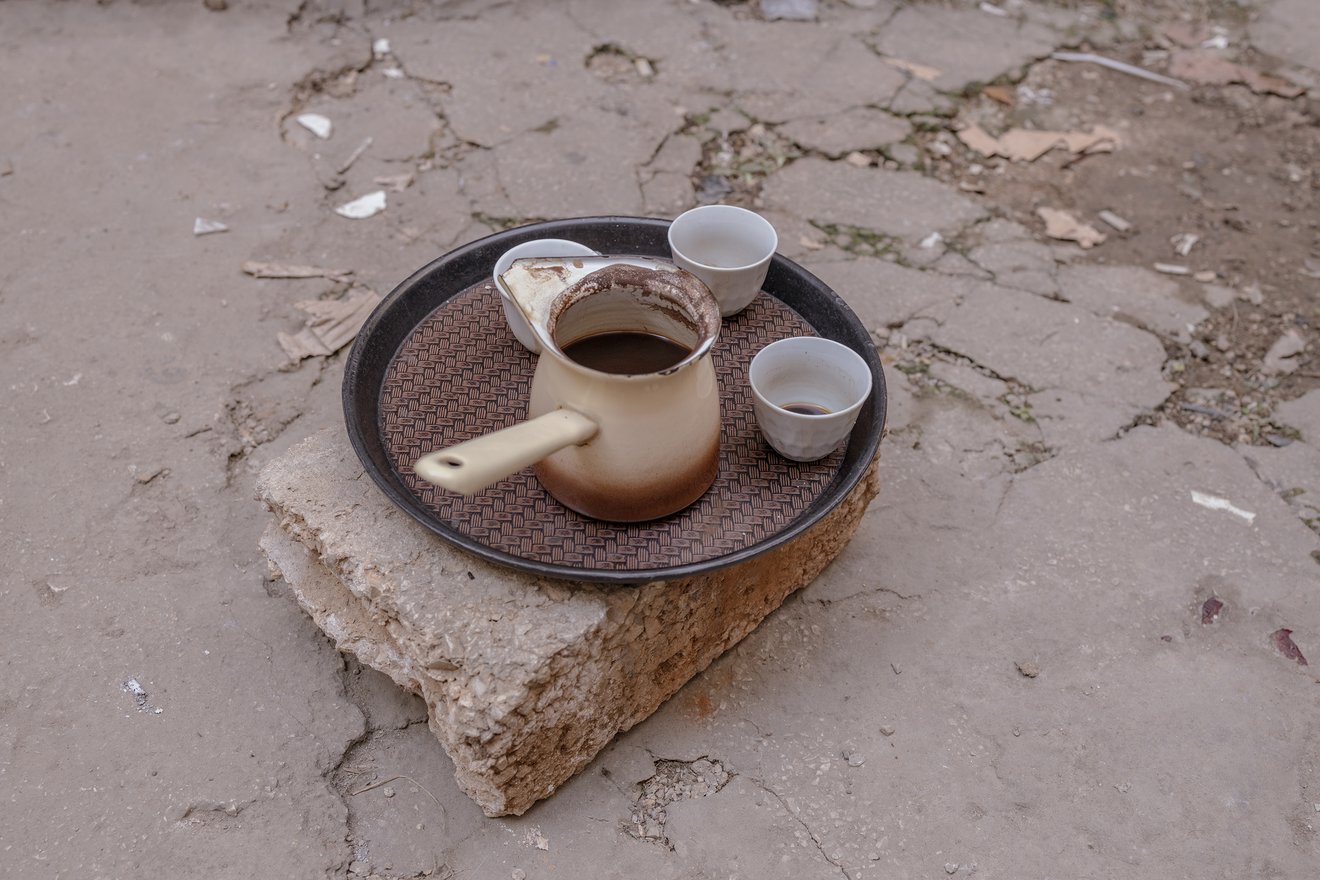
(c) Laura Menassa / DEC / Fairpicture
Looking Ahead
Let’s be honest: The market for ethical visual communication remains unstable. Budgets are tight. While some still doubt that AI-generated images actually undermine trust in organizations, the IFRC has already reached this conclusion in its latest World Disaster Report:
«Harmful information is no longer a peripheral communications issue but a de facto humanitarian crisis.»
In fact, harmful information can undermine access to aid, erode trust in organisations, destabilize social cohesion and increase risks for staff, volunteers and communities. That's why I believe it will become increasingly important for iNGOs and Foundations not only to demonstrate the authenticity of their visual material and the informed consent of the people depicted, but also to adopt approaches where their contributors own the stories they share and not just appear in it.
Stories that will serve as insightful project evaluations for program and M&E teams supplemented by visual communication materials that bring them to life.
I'm genuinely excited about the conversations ahead – for example at our next FairTalk on Tuesday, May 26th, where we will introduce Fairpicture's CLS – together with our facilitators, creators, former contributors and clients – save this date!
After our first big milestone – shifting from imported to local visual creators – we are now ready to take the next one: empowering organisations to work with storytelling that is wholly in service of the contributors' perspectives.
And that’s why – amid all the chaos and destructive energy out there in the world – building something like this makes me actually really hopeful.
It’s time to step aside.
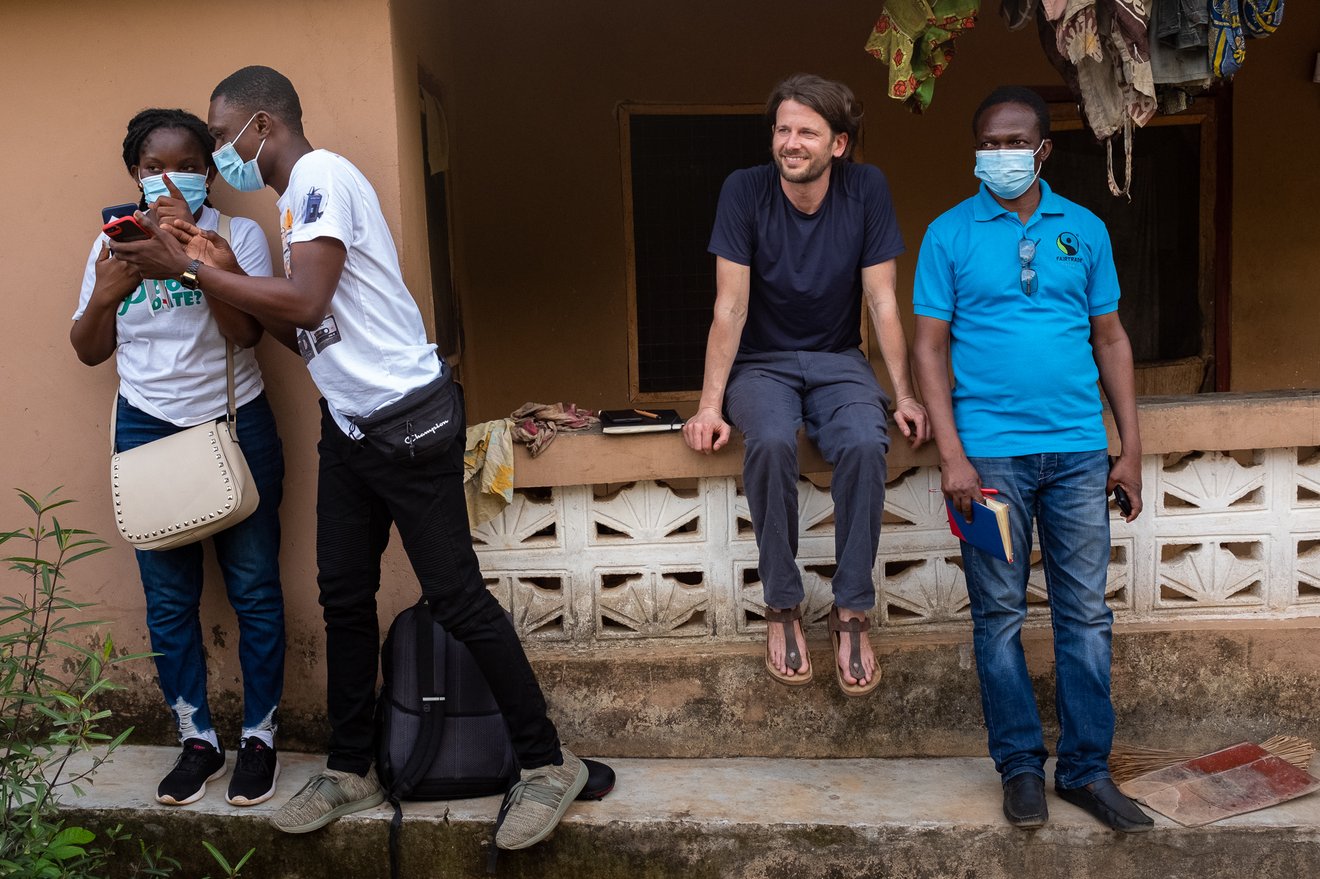
© Nipah Dennis / Fairtrade Germany / Fairpicture
Latest blog posts
Our community's inspiring voices
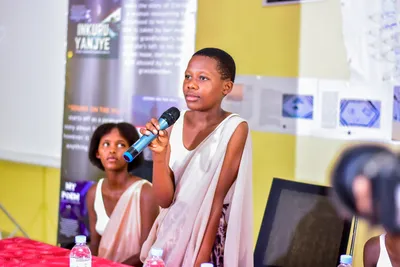
July 2026 - Tom Martin
Beyond Representation: From Storytelling to Social Change
A prize-winning photo, but an uneasy feeling underneath it. Tom Martin on how that contradiction turned him from photographer into co-creator of Community-Led Storytelling – and how communities from Rwanda to Morocco have used their own stories to shape policy.
Learn more about Beyond Representation: From Storytelling to Social Change
May 2026 - Daniel Caspari
Step Aside.
Local creators were just the first step. Now Fairpicture is going further – with a new approach that puts narrative ownership where it belongs: with the people who lived the story.
Learn more about Step Aside.
November 2025 - Prof. Dr. Peter G. Kirchschlaeger
Ethical Pictures in the Age of AI – An Opinion Piece
This article explores what truly makes a picture “ethical” in the age of AI-generated imagery, arguing for human-made, consent-based visuals that respect truth, dignity and autonomy.
Learn more about Ethical Pictures in the Age of AI – An Opinion Piece